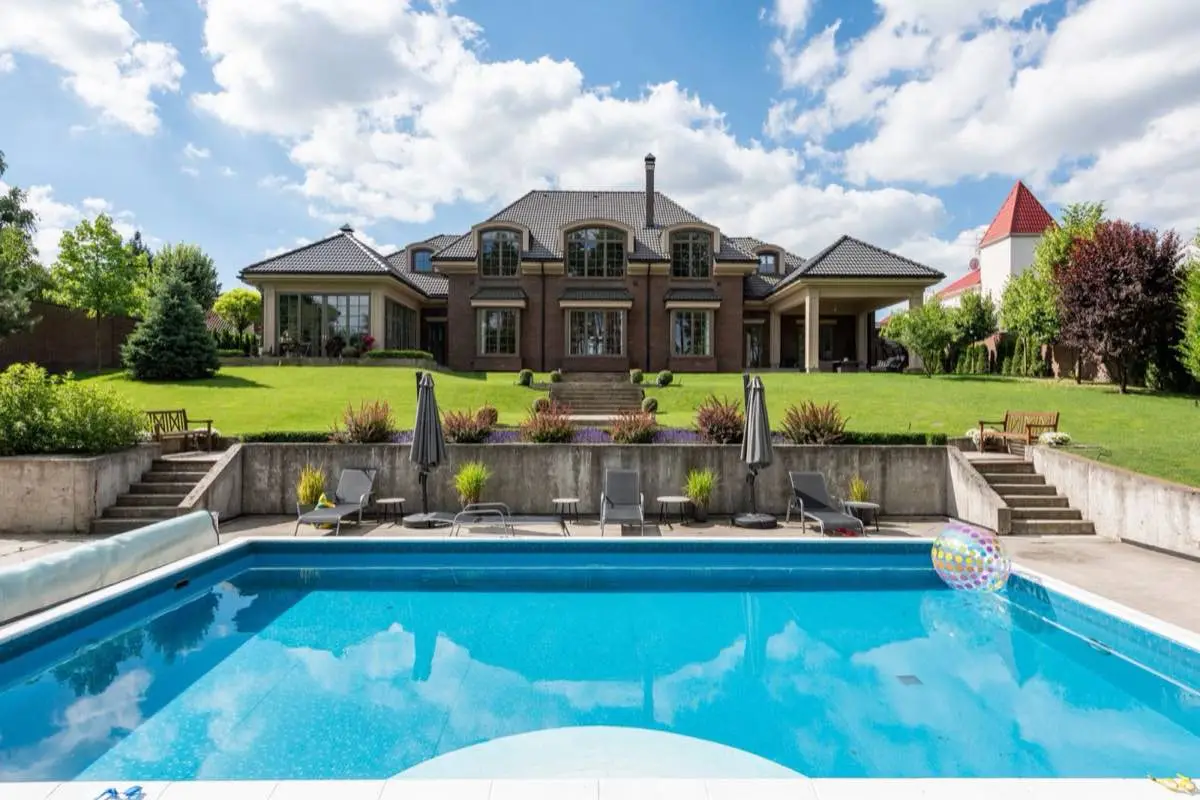
The short answer on pool deck ideas: pick the material for foot temperature and slip resistance first, looks second. A stunning deck that cooks bare feet at 2 p.m. and gets slick when wet is a deck nobody uses. Everything below is ranked by how it performs when the pool is actually in use, not how it photographs.
Also worth saying up front — the deck is usually 30 to 50 percent of what people spend on a pool project and it gets almost none of the research time. The pool gets six weeks of Pinterest. The deck gets a phone call.
Cost, at a glance
| Deck material | Installed cost per sq ft | Notes |
|---|---|---|
| Broom-finished concrete | $6–$12 | Cheapest, most repair-resistant if reinforced properly |
| Acrylic cool-deck coating | $3–$8 over sound slab | Resurfacing only, not a new deck |
| Exposed aggregate | $10–$18 | Great grip, hard on bare knees |
| Stamped concrete | $12–$22 | Needs resealing every 2–3 years |
| Concrete pavers | $15–$30 | Repairable one unit at a time |
| Travertine | $18–$35 | Stays coolest; porous, seal it |
| Porcelain pavers | $25–$45 | Very stable color; verify the wet slip rating |
| Composite decking | $30–$60 | For raised decks and above-ground pools |
A 500 square foot deck — a fairly typical wraparound for a 16x32 pool — puts broom concrete around $4,000 and travertine around $12,000. Same footprint, very different Saturday.
The two specs that matter more than the material
Foot temperature. Dark surfaces in full sun regularly exceed 140 degrees. That is not a comfort issue, it is a "kid running from the pool to the house" issue. Light colors, porous stone, and anything with a texture that traps a film of water all run cooler. If you love a dark deck, at least keep a light-colored path from the door to the water.
Wet slip resistance. Ask any contractor for the material's wet dynamic coefficient of friction. The ANSI A326.3 standard sets 0.42 as the floor for level interior surfaces that get wet, and a pool deck should do better than that — look for products rated for wet barefoot use, which the DIN 51097 barefoot ramp classes (A, B, C) describe directly. Polished travertine looks incredible and behaves like an ice rink. Honed or tumbled is the version you want.
If a salesperson cannot produce either number, that tells you something about the product and something about the salesperson.
Ideas that actually change how the space feels
- A tanning ledge with two inches of water does more for family use than any deck upgrade. It is where toddlers and adults with a drink both end up.
- Extend the deck on one side only. People instinctively build an even border. You do not need 10 feet behind the diving end. Put the money where the chairs go.
- Break up big concrete pours with joints or bands. A 500 square foot monolithic slab will crack somewhere; control joints decide where. A contrasting paver band at the joint turns an engineering requirement into a design feature.
- Cantilevered coping over the pool edge looks cleaner than bullnose brick and costs about the same.
- Overhead shade beats deck material for comfort. A $4,000 structure over the seating area changes more than a $6,000 material upgrade.
The stamped concrete opinion
We will take a side here, because "both have pros and cons" is not useful to anyone.
Skip stamped concrete around a pool unless you will genuinely reseal it every 2 to 3 years. The pattern is fine. The problem is the sealer that makes the color pop is also what makes it slick when wet, and when it wears unevenly you get a blotchy deck that looks worse than plain concrete ever would. Stamped concrete around pools that got sealed once in 2019 is a look, and it is not a good one.
If you want pattern and color that survives neglect, pavers or travertine hold up better without a maintenance schedule.
The expansion joint nobody inspects
Between the coping and the deck there is a flexible joint filled with mastic. It exists because concrete moves and the pool shell does not move the same way.
When that joint dries out and cracks — and it does, on a 10 to 15 year cycle — the deck starts pushing directly on the coping. That is how you get cracked waterline tile and lifted coping stones that cost thousands to fix, all from a joint that costs a few hundred dollars to replace.
Look at yours this weekend. If you can see a gap you could drop a pencil into, or the mastic is hard and crumbling, get it replaced before it becomes a remodeling job.
Drainage: boring, decides everything
Slope away from the pool, roughly a quarter inch per foot. Where the deck meets a house wall or a retaining wall, you need a channel drain or the water has nowhere to go and finds your foundation.
The failure mode is not dramatic. It is just that every rain rinses lawn fertilizer, dirt, and deck grit into your pool, and then you wonder why the filter loads up and the plaster stains. Slope solves problems you never have to diagnose.
When you do not need a contractor
If your existing slab is structurally sound and just looks tired, an acrylic cool-deck coating is a genuine DIY weekend. Pressure wash, patch, roll or spray the texture coat, seal. Materials for 500 square feet run a few hundred dollars. It will not fix a cracked or heaved slab, and it will not stick to a surface that still has old sealer on it, but on a decent slab it looks good and it drops the surface temperature.
Do not DIY a new pour, anything involving the coping, or a paver base. Paver decks fail at the base, not the surface, and getting 6 inches of compacted road base right is not something you learn on your own patio.
Salt changes the material list
If you run a saltwater pool, salt spray and splash-out get into everything. Unsealed concrete and some natural stones spall over time, and any mild steel hardware nearby — railing anchors, ladder bolts — needs to be stainless. Seal the deck, specify 316 stainless where you can, and rinse the deck occasionally. It is not a reason to avoid saltwater. It is a reason to spec the deck knowing.
Port St. Lucie Pool Builders builds and resurfaces pool decks across Port St. Lucie and the Treasure Coast in concrete, pavers, and stone, and we will tell you when a coating over your existing slab is the smarter spend. If the pool interior is due at the same time, doing both in one shutdown saves real money — see our plaster versus pebble breakdown or call (844) 415-2670.
Get a free quote → · call (844) 415-2670
Ready for a free quote in Port St. Lucie?
Port St. Lucie Pool Builders — free estimate, clear scope, no pressure. Use the form on this page or jump to the homepage quote.
Related services in Port St. Lucie
Port St. Lucie Pool Builders money pages — go straight to the service you need.
- Pool Remodeling & Renovation →
Port St. Lucie Pool Pros remodels pools for Treasure Coast weather, older shells, and hurricane-season realities.
- Pool Resurfacing & Replastering →
Pool resurfacing and replastering in Port St. Lucie replaces the worn interior that makes an older pool feel rough underfoot and look permanently stained, and here the first job is working out whether you need a resurface at all or just a proper stain treatment.
- Pool Lighting & LED Upgrades →
Pool lighting in Port St. Lucie fails by electricity far more often than it fails by burning out.
- Gunite & Shotcrete Pool Construction →
Gunite pool construction in Port St. Lucie runs on a permit calendar before it runs on a build calendar, and knowing that order is what keeps a project from stalling at month three.
- Screen Enclosures & Pool Cages →
Screen enclosure and pool cage construction in Port St. Lucie is engineered aluminum structure work, not bug-screen assembly, and on the Treasure Coast a cage has to be designed and permitted for county wind loads.
Frequently asked questions
What is the cheapest pool deck material?
Broom-finished concrete, at roughly $6 to $12 per square foot installed. If you already have a sound slab, a textured acrylic cool-deck coating over it runs $3 to $8 per square foot and is cheaper still. Both are honest choices — a plain light-colored deck kept clean beats an expensive one installed badly.
What pool deck material stays coolest?
Light-colored travertine and other porous natural stone stay noticeably cooler than dark pavers or dark stamped concrete, which can climb past 140 degrees in direct the Treasure Coast sun. Color matters more than material. A light gray concrete deck beats a charcoal porcelain paver on a July afternoon every time.
How wide should a pool deck be?
Three to four feet is the working minimum for a walkway, but that is circulation only. Any side where you want lounge chairs needs 8 to 10 feet, because a chaise is about 7 feet long and someone still has to walk behind it.
Are pavers better than concrete around a pool?
For repairability, yes. A cracked concrete deck is a patch or a demolition; a stained or cracked paver is a $6 swap. Pavers cost roughly double at $15 to $30 per square foot installed and need a properly compacted base or they settle in tire tracks.
Do I need to seal my pool deck?
Stamped and colored concrete, yes, roughly every 2 to 3 years, or the color fades and you lose the finish. Broom-finished gray concrete does not strictly need it. Pavers around a saltwater pool benefit from sealing because salt is hard on unsealed concrete products.
How much slope does a pool deck need?
About a quarter inch per foot, sloping away from the water. Get this wrong and every rain sends dirt and lawn chemicals into your pool, which is a filter problem, a chemistry problem, and eventually a staining problem.
Local context
How this applies in Port St. Lucie, FL
Every article here is written from pool work done in Port St. Lucie and the Treasure Coast, so the numbers reflect local labour, permit and material costs rather than a national average. Your own job can land either side of them depending on access, the condition of what is already there, and the materials you pick — gunite and shotcrete construction, screen enclosures and pool cages, PebbleTec and quartz interior finishes.
The way to turn any of this into a real answer is to have someone look at your actual situation. The free estimate is free, itemized and written down, with no deposit and no obligation. Call (844) 415-2670 or start on the Port St. Lucie Pool Builders homepage.
Areas Port St. Lucie Pool Builders covers
Port St. Lucie first, then the surrounding communities of the Treasure Coast. Each has its own page with local detail rather than a copy of this one:
- Fort Pierce, FL — St. Lucie County, population 47,300
- Stuart, FL — Martin County, population 17,400
- Jensen Beach, FL — Martin County, population 12,700
- Palm City, FL — Martin County, population 25,900
- Hobe Sound, FL — Martin County, population 13,200
- Vero Beach, FL — Indian River County, population 16,400
Or jump to the full list of Port St. Lucie services.
More from the Port St. Lucie Pool Builders blog
- Inground Pool Monthly Maintenance Cost: Port St. Lucie
What an inground pool really costs per month in Port St. Lucie, FL — chemicals, power, water, weekly service rates, and the repair fund nobody budgets for.
- Above Ground vs Inground Pool: Port St. Lucie Tradeoffs
Above ground vs inground pool in Port St. Lucie, FL — honest cost ranges, lifespan, resale reality, and code requirements you cannot skip.
- Pool Resurfacing Cost in Port St. Lucie: What to Pay
Pool resurfacing cost in plain English — plaster, pebble, and tile ranges, what drives the price, and when to resurface a pool in Port St. Lucie, FL.
The Port St. Lucie Pool Builders Team
pool specialists serving Port St. Lucie, FL
Written by the Port St. Lucie Pool Builders team — insured pool pros with 15+ years serving Port St. Lucie, FL and the surrounding area.